In today’s connected world, almost every activity leaves some kind of digital footprint. We send emails, browse websites, use smartphones, store photos in the cloud, make online payments, and communicate through social media. While these technologies make everyday life easier, they can also create opportunities for cybercrime. When a digital incident occurs, investigators need reliable methods to discover what happened, how it happened, and who may have been involved.
This is where Digital Forensics becomes important.
Digital forensics is the process of collecting, preserving, examining, and analyzing information from digital devices and systems. It can help investigators uncover evidence from computers, smartphones, servers, storage devices, networks, and online accounts. The field combines technology, investigation techniques, and careful evidence handling to understand digital events.
What Is Digital Forensics?
Digital forensics is a specialized area of cybersecurity and investigation that focuses on digital evidence. The evidence may exist on a computer hard drive, mobile phone, USB drive, server, cloud account, or another electronic device.
For example, if a company discovers that confidential files have been stolen, a forensic investigation may help determine which system was accessed, when the access occurred, what files were viewed, and whether information was transferred elsewhere.
The goal is not simply to find deleted files or inspect a computer. A proper forensic investigation attempts to reconstruct events while preserving the integrity of the evidence.
Because digital information can easily be changed, deleted, or damaged, investigators must follow controlled procedures when handling it.
Why Is Digital Forensics Important?
Cyberattacks and digital crimes are becoming increasingly sophisticated. Organizations may face ransomware, phishing, unauthorized access, insider threats, data theft, identity fraud, and other security incidents.
Digital forensics can help organizations understand these incidents after they occur. It can also provide valuable information for improving security and preventing similar incidents in the future.
For law enforcement agencies, forensic evidence can support investigations involving online fraud, cybercrime, harassment, financial crimes, intellectual property theft, and other offenses.
Businesses can also use forensic techniques to investigate suspicious employee activity, compromised accounts, stolen information, or security breaches.
In simple terms, digital forensics helps answer important questions:
- What happened?
- When did it happen?
- How did it happen?
- Which systems or accounts were affected?
- What information was accessed?
- What evidence remains?
- How can the organization prevent the incident from happening again?
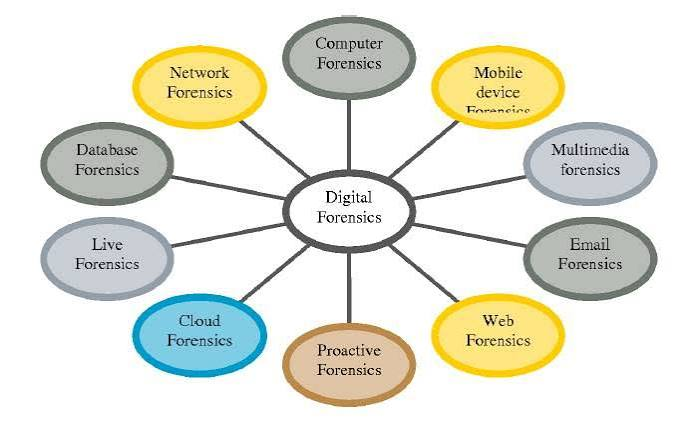
Common Types of Digital Forensics
Digital forensics covers several specialized areas. Each type focuses on a particular source of digital evidence.
1. Computer Forensics
Computer forensics involves examining desktops, laptops, hard drives, and other computer systems. Investigators may analyze files, operating system activity, browser history, logs, deleted information, and other data.
Computer forensics can be useful when investigating unauthorized access, employee misconduct, malware incidents, data theft, or other suspicious activities.
2. Mobile Forensics
Smartphones contain enormous amounts of personal and professional information. Mobile forensics focuses on collecting and analyzing evidence from phones and tablets.
Depending on the device and available evidence, investigators may examine messages, call records, application data, photographs, videos, location information, and other digital artifacts.
Because mobile operating systems and applications frequently change, investigators need specialized knowledge and appropriate forensic methods.
3. Network Forensics
Network forensics focuses on data moving through computer networks. Investigators may examine network logs, traffic records, connection information, and security alerts to understand suspicious activity.
For example, if an attacker gains access to a company’s network, network forensic analysis may help identify unusual connections and determine how the attacker moved through the environment.
4. Cloud Forensics
Many organizations now store information in cloud environments. Cloud forensics involves investigating evidence associated with cloud services and infrastructure.
This can be more complicated than traditional computer forensics because data may be distributed across multiple servers, locations, and service providers. Investigators may need to work with cloud administrators or providers to obtain relevant records.
5. Database Forensics
Database forensics focuses on information stored in databases. Investigators may examine database activity, changes to records, access logs, and other information to determine whether data was improperly modified, deleted, or accessed.
This can be particularly important for organizations handling financial, customer, or confidential business information.
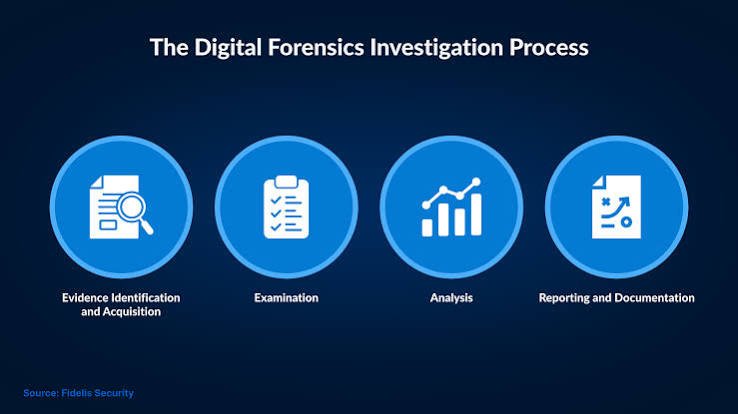
The Digital Forensics Process
A professional forensic investigation generally follows a structured process. Although specific procedures can vary depending on the case, several important stages are commonly involved.
Identification
The first step is identifying the potential sources of evidence. These may include computers, smartphones, servers, external drives, network logs, cloud accounts, or other systems.
Investigators determine which devices and data sources may contain useful information.
Preservation
Digital evidence must be protected from unnecessary modification. Investigators use controlled procedures to preserve the original evidence and maintain its integrity.
In many investigations, forensic copies or images are created so analysts can examine the information without unnecessarily changing the original source.
Collection
Relevant digital evidence is collected according to appropriate technical and legal procedures. Documentation is important during this stage because investigators may need to demonstrate where evidence came from and how it was handled.
Examination
After collection, investigators examine the available data. They may search for files, timestamps, system activity, deleted information, application artifacts, logs, and other relevant details.
The amount of information can be enormous, so forensic software and specialized analytical techniques are often used to identify important evidence.
Analysis
Examination and analysis are closely related, but analysis focuses on interpreting the evidence and connecting different pieces of information.
For example, a single login record may not explain an incident. However, when combined with network activity, file access records, and system timestamps, it may help investigators reconstruct a sequence of events.
Reporting

The final stage is documenting the findings. A forensic report should clearly explain what was examined, which methods were used, what evidence was discovered, and what conclusions can reasonably be drawn.
A good report should be understandable to both technical and non-technical readers.
Digital Evidence and Its Challenges
Digital evidence can be extremely valuable, but it also presents unique challenges.
One major challenge is the enormous volume of information generated by modern devices. A single smartphone or computer may contain thousands of files and records.
Another challenge is encryption. Modern devices and applications often use strong encryption to protect user information. Investigators may therefore encounter situations where accessing relevant evidence is technically difficult.
Cloud computing creates additional challenges because information may be stored across different systems and jurisdictions.
Deleted data can also be difficult to recover. In some circumstances, forensic techniques may recover remnants of deleted information, but recovery is not always possible.
Privacy and legal requirements are another important consideration. Investigators must ensure that evidence is collected and handled according to applicable laws, regulations, organizational policies, and authorized procedures.
Digital Forensics in Cybersecurity
Digital forensics is closely connected with cybersecurity. Security teams can use forensic analysis after a suspected breach to understand the attack and determine its impact.
Suppose a company’s employee clicks a malicious link and an attacker gains access to an account. Security professionals may investigate authentication logs, endpoint activity, network connections, and file access records.
The investigation can help identify the initial entry point and determine whether the attacker accessed additional systems.
This information can then be used to strengthen security controls, improve monitoring, update policies, and educate employees.
For this reason, digital forensics is not only about investigating the past. Its findings can also contribute to better security in the future.
Skills Needed for a Digital Forensics Career
People interested in digital forensics can develop a combination of technical and investigative skills.
A strong understanding of operating systems, computer networks, databases, cybersecurity concepts, and file systems is useful. Attention to detail is equally important because small pieces of information can sometimes become significant when combined with other evidence.
Problem-solving and analytical thinking are also valuable. Investigators often work with incomplete information and must carefully evaluate evidence before reaching conclusions.
Good documentation and communication skills matter as well. Technical findings may need to be explained to managers, lawyers, clients, investigators, or other people who do not have a technical background.
Depending on the career path, professionals may also pursue relevant education, training, certifications, and practical experience.
The Future of Digital Forensics
As technology continues to evolve, digital forensics will also change. Artificial intelligence, cloud computing, Internet of Things devices, advanced encryption, and increasingly complex applications are creating new sources of digital evidence.
Smart devices can generate information about activities, locations, connections, and system events. At the same time, the growing amount of digital information makes forensic analysis more challenging.
Future forensic professionals will likely need to understand not only traditional computers and smartphones but also cloud infrastructure, connected devices, artificial intelligence systems, and modern enterprise environments.
Automation may also help investigators process large amounts of evidence more efficiently. However, human judgment will remain important when interpreting findings and determining whether evidence actually supports a particular conclusion.
Frequently Asked Questions About Digital Forensics
1. What is Digital Forensics?
Digital Forensics is the process of collecting, preserving, examining, and analyzing digital evidence from devices such as computers, smartphones, servers, and storage systems. It helps investigators understand what happened during a digital incident or cybercrime.
2. Why is Digital Forensics important?
Digital Forensics is important because it helps organizations and investigators discover the source of security incidents, identify suspicious activities, recover useful evidence, and understand how an attack or digital crime occurred.
3. What devices can be examined through Digital Forensics?
Digital forensic investigations can involve computers, laptops, smartphones, tablets, hard drives, USB devices, servers, network systems, cloud environments, and databases. The exact devices examined depend on the nature of the investigation.
4. What does a Digital Forensic investigator do?
A Digital Forensic investigator collects and preserves digital evidence, examines files and system activity, analyzes relevant information, reconstructs events, and prepares detailed reports. Investigators must also carefully document how evidence was handled.
5. Is Digital Forensics part of cybersecurity?
Yes. Digital Forensics is closely connected to cybersecurity. It is often used after a cyberattack or security breach to determine how an incident happened, what systems were affected, and what evidence can help prevent similar incidents in the future.
Conclusion
Digital Forensics has become an important part of modern cybersecurity and digital investigations. By systematically collecting, preserving, examining, and analyzing digital evidence, investigators can reconstruct events and better understand what happened during a security incident or digital investigation.
From computer and mobile forensics to network, cloud, and database investigations, the field covers a wide range of technologies. Its importance is likely to increase as more personal, business, and financial activities move into digital environments.
For anyone interested in cybersecurity, investigation, or technology, learning about Digital Forensics can provide a valuable understanding of how digital evidence is discovered and interpreted. As technology continues to develop, skilled forensic professionals will remain essential for helping organizations and investigators respond to an increasingly complex digital world.