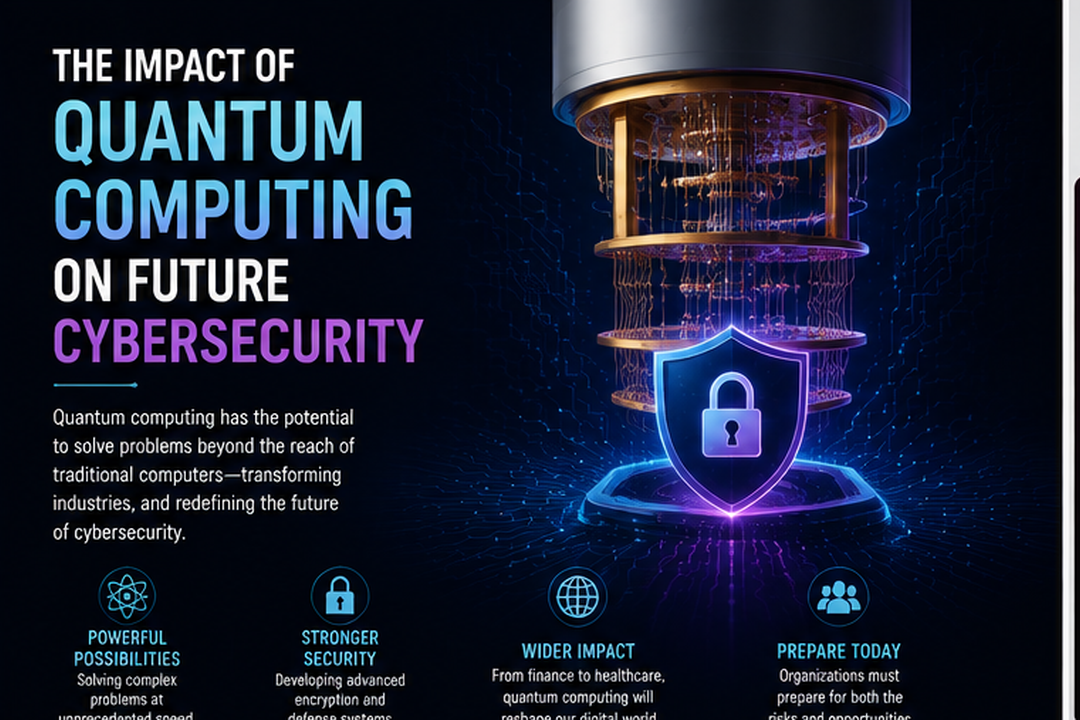
Technology continues to evolve at an incredible pace, changing how people communicate, work, store information, and protect digital systems. Among the most revolutionary technologies emerging today, quantum computing has attracted significant attention because of its potential to solve complex problems that are beyond the capabilities of traditional computers.
While quantum computing offers exciting opportunities in areas such as medicine, artificial intelligence, scientific research, and financial modeling, it also introduces new challenges for cybersecurity. The same computing power that could help solve major global problems could potentially threaten many of the encryption methods currently used to protect digital information.
This is why understanding the impact of quantum computing on future cybersecurity has become increasingly important. Organizations, governments, and cybersecurity professionals are already researching ways to prepare for a future where quantum technologies become more advanced and widely available.
Quantum computing is not expected to replace traditional computers immediately, but its future development could significantly change how digital security works.
What Is Quantum Computing?
Quantum computing is an advanced form of computing that uses principles from quantum physics to process information in new ways.
Traditional computers use bits as the smallest unit of information. A bit can represent either a 0 or a 1.
Quantum computers use quantum bits, commonly called qubits. Unlike traditional bits, qubits can exist in combinations of states through a quantum property known as superposition.
Quantum computers also use other quantum principles, such as entanglement, which allows quantum systems to have connections that do not exist in classical computing.
These unique characteristics allow quantum computers to perform certain calculations much more efficiently than traditional computers.
However, quantum computing is not simply a faster version of a normal computer. It is designed for specific types of complex problems where traditional computing methods may struggle.
Why Quantum Computing Matters for Cybersecurity
Cybersecurity depends heavily on encryption.
Encryption protects sensitive information by converting readable data into a protected format that unauthorized individuals cannot easily access.
Every day, encryption helps protect:
- Online banking transactions
- Private communications
- Business information
- Healthcare records
- Government systems
- Cloud services
- Digital identities
Many current encryption systems rely on mathematical problems that are extremely difficult for traditional computers to solve.
However, sufficiently powerful quantum computers may be able to solve some of these problems much faster.
This creates a future cybersecurity challenge: encryption methods that are secure today may require replacement as quantum technology advances.
How Quantum Computers Could Affect Current Encryption
Modern cybersecurity uses several types of encryption algorithms.
Public-key encryption systems, such as those based on mathematical problems involving large numbers or complex structures, are widely used for secure communication.
A powerful quantum computer could potentially use specialized quantum algorithms to attack some of these systems.
One of the most discussed examples is Shor’s algorithm, a quantum algorithm that could theoretically solve certain mathematical problems much faster than classical methods.
If large-scale quantum computers become practical, some existing encryption techniques may no longer provide sufficient protection.
This does not mean current cybersecurity systems will suddenly become useless. Quantum computers capable of breaking widely used encryption methods do not yet exist at the required scale.
However, cybersecurity experts recognize that preparation must begin before such systems become available.
The Rise of Post-Quantum Cryptography
To address future quantum threats, researchers are developing post-quantum cryptography (PQC).
Post-quantum cryptography focuses on creating encryption algorithms designed to remain secure against both traditional and quantum computers.
The goal is to develop security methods that protect digital information even in a future where attackers have access to quantum computing capabilities.
Post-quantum cryptography is becoming an important area of cybersecurity research.
Organizations are studying:
- New encryption algorithms
- Secure digital signatures
- Quantum-resistant communication methods
- Migration strategies for existing systems
The transition will require careful planning because encryption systems are deeply integrated into websites, applications, financial systems, government infrastructure, and enterprise networks.
The “Harvest Now, Decrypt Later” Threat
One major concern related to quantum computing is known as harvest now, decrypt later.
This refers to a strategy where attackers collect encrypted information today and store it until future technology becomes powerful enough to decrypt it.
Sensitive information with long-term value could become a target.
Examples may include:
- Government communications
- Research data
- Business secrets
- Personal records
- Intellectual property
Even if encrypted information cannot currently be accessed, attackers may preserve it with the hope that future quantum technology will allow decryption.
This is one reason organizations handling sensitive information are already considering quantum-resistant security strategies.
Quantum Computing and Artificial Intelligence in Cybersecurity
Quantum computing may also influence artificial intelligence and cybersecurity defense systems.
Modern cybersecurity increasingly uses artificial intelligence and machine learning to detect threats, analyze patterns, and respond to suspicious activity.
Quantum computing could potentially improve certain optimization and data-processing tasks.
Future cybersecurity systems may combine:
- Artificial intelligence
- Machine learning
- Quantum computing
- Advanced analytics
- Automated threat detection
Such combinations could help security teams analyze complex problems more efficiently.
However, attackers may also attempt to use advanced technologies for malicious purposes.
Cybersecurity will continue to involve competition between those developing protective technologies and those attempting to bypass them.
Quantum Computing Could Improve Cybersecurity Defense
Although quantum computing creates risks, it may also provide new opportunities for cybersecurity.
Quantum technologies could potentially support stronger security solutions in areas such as:
- Advanced encryption methods
- Secure communication systems
- Complex threat analysis
- Optimization of security processes
For example, quantum communication research explores methods that may improve secure information exchange.
Quantum key distribution (QKD) is one area being studied for creating highly secure communication channels.
However, quantum security technologies also face practical challenges, including cost, infrastructure requirements, and scalability.
The future of cybersecurity will likely involve a combination of quantum-resistant traditional systems and carefully developed quantum technologies.
The Importance of Preparing Early
One of the biggest lessons from previous technology changes is that preparation takes time.
Organizations cannot wait until quantum computers become powerful enough to create security problems before beginning migration.
Changing encryption systems across large organizations can require years of planning, testing, and implementation.
Companies may need to:
- Identify where encryption is currently used
- Understand sensitive data requirements
- Evaluate quantum risks
- Test new security methods
- Update systems gradually
A proactive approach can reduce future disruption.
Cybersecurity has always depended on anticipating threats before they become widespread.
Industries Most Affected by Quantum Cybersecurity
Certain industries may need to pay special attention to quantum-related cybersecurity risks because they manage highly sensitive information.
Financial Services
Banks and financial institutions rely heavily on encryption to protect transactions, customer information, and digital payments.
Future quantum-resistant security will be important for maintaining trust in financial systems.
Healthcare
Healthcare organizations store valuable medical records and research information.
Protecting patient data over long periods will remain a major priority.
Government and Defense
Government agencies often handle classified and sensitive information.
Long-term protection of communications and national security data makes quantum preparedness especially important.
Technology Companies
Technology companies manage large amounts of user data and operate critical digital infrastructure.
They will play a major role in developing and adopting quantum-safe security solutions.
Research and Scientific Organizations
Research data, intellectual property, and discoveries may have long-term value, making protection against future threats important.
Quantum Computing and Cloud Security
Cloud computing has become a central part of modern digital infrastructure.
Organizations use cloud platforms to store information, run applications, and manage business operations.
As quantum computing develops, cloud security will also need to evolve.
Cloud providers are researching quantum-resistant technologies and security strategies that can support future requirements.
Companies such as IBM Cloud, Microsoft Azure, and Google Cloud are involved in quantum computing research and security development.
The future of cloud cybersecurity will likely include stronger encryption methods designed for a changing technological environment.
Challenges of Quantum Cybersecurity
Although quantum-resistant security is promising, several challenges remain.
Technical Complexity
Quantum computing is highly complex, and developing practical quantum-resistant solutions requires advanced research.
Migration Difficulties
Replacing existing encryption systems across global infrastructure will be a major challenge.
Cost
Organizations may need significant investment in new technologies, testing, and security upgrades.
Lack of Awareness
Many businesses are still focused on current cybersecurity threats and may not yet understand the importance of preparing for quantum risks.
Standards Development
The cybersecurity community needs widely accepted standards to ensure consistent protection across industries.
Solving these challenges will require cooperation between researchers, governments, technology companies, and organizations.
The Role of Governments and Security Organizations
Governments and cybersecurity organizations around the world are studying quantum risks and developing recommendations for future security.
Standards organizations are working on evaluating and promoting quantum-resistant cryptographic methods.
Public-private collaboration will be important because cybersecurity threats often affect multiple sectors simultaneously.
Preparing for quantum computing requires coordinated action rather than isolated efforts.
How Businesses Can Prepare for Quantum Security
Businesses can begin preparing for the quantum future by taking several steps:
Understand Current Encryption Usage
Organizations should identify where encryption is used throughout their systems.
Classify Sensitive Information
Not all data requires the same level of protection. Businesses should identify information with long-term sensitivity.
Follow Security Developments
Companies should monitor progress in post-quantum cryptography and cybersecurity standards.
Plan Migration Strategies
Moving toward quantum-resistant security should be approached gradually with testing and careful implementation.
Train Security Teams
Cybersecurity professionals should develop awareness of quantum-related risks and solutions.
Early preparation can make future transitions smoother.
The Future Relationship Between Quantum Computing and Cybersecurity
The future of cybersecurity will not be defined only by protecting systems from quantum computers. It will involve using advanced technologies responsibly while maintaining strong digital protection.
Quantum computing may become a powerful tool for solving complex problems, but it will also challenge existing security assumptions.
Cybersecurity professionals will need to rethink encryption strategies, improve digital defenses, and develop systems capable of adapting to future technologies.
The transition toward quantum-safe security will likely happen gradually.
Organizations that begin preparing early will have a stronger position as quantum technology continues to develop.
Conclusion
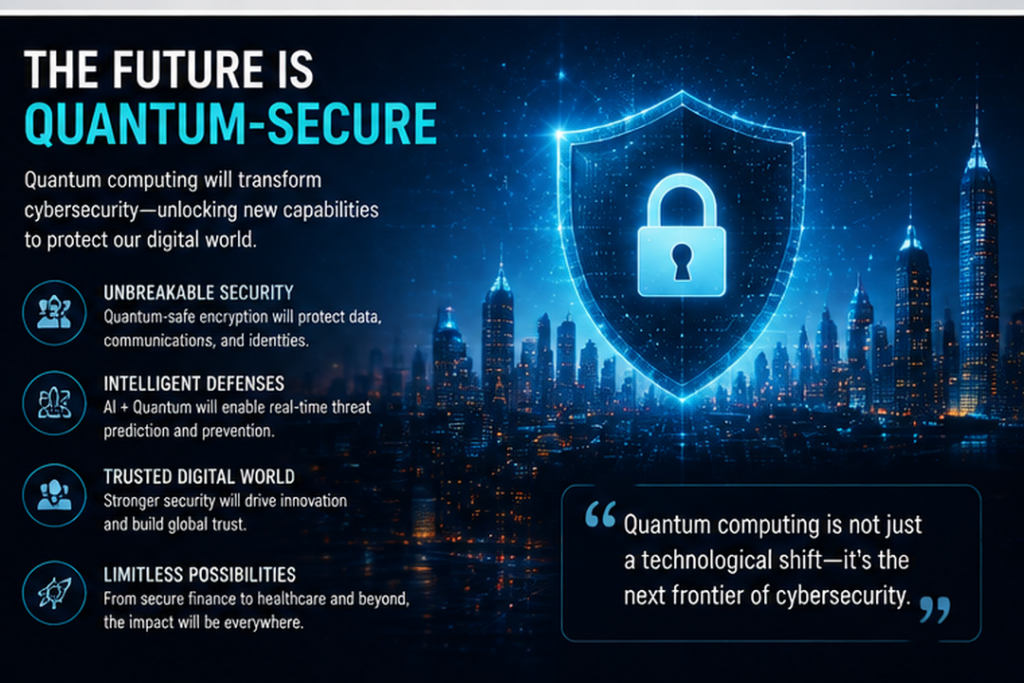
Quantum computers have the potential to transform industries and solve problems that are difficult for traditional computers. However, they may also create risks for current encryption systems that protect digital information worldwide.
The solution is not to fear quantum technology but to prepare for it.
Post-quantum cryptography, advanced security research, improved encryption methods, and proactive planning will help organizations build stronger defenses.
Cybersecurity has always been about adapting to new threats. As technology continues to evolve, the ability to prepare, innovate, and protect digital systems will remain essential.
The future of cybersecurity will belong to those who understand emerging technologies and build security strategies capable of evolving alongside them.