
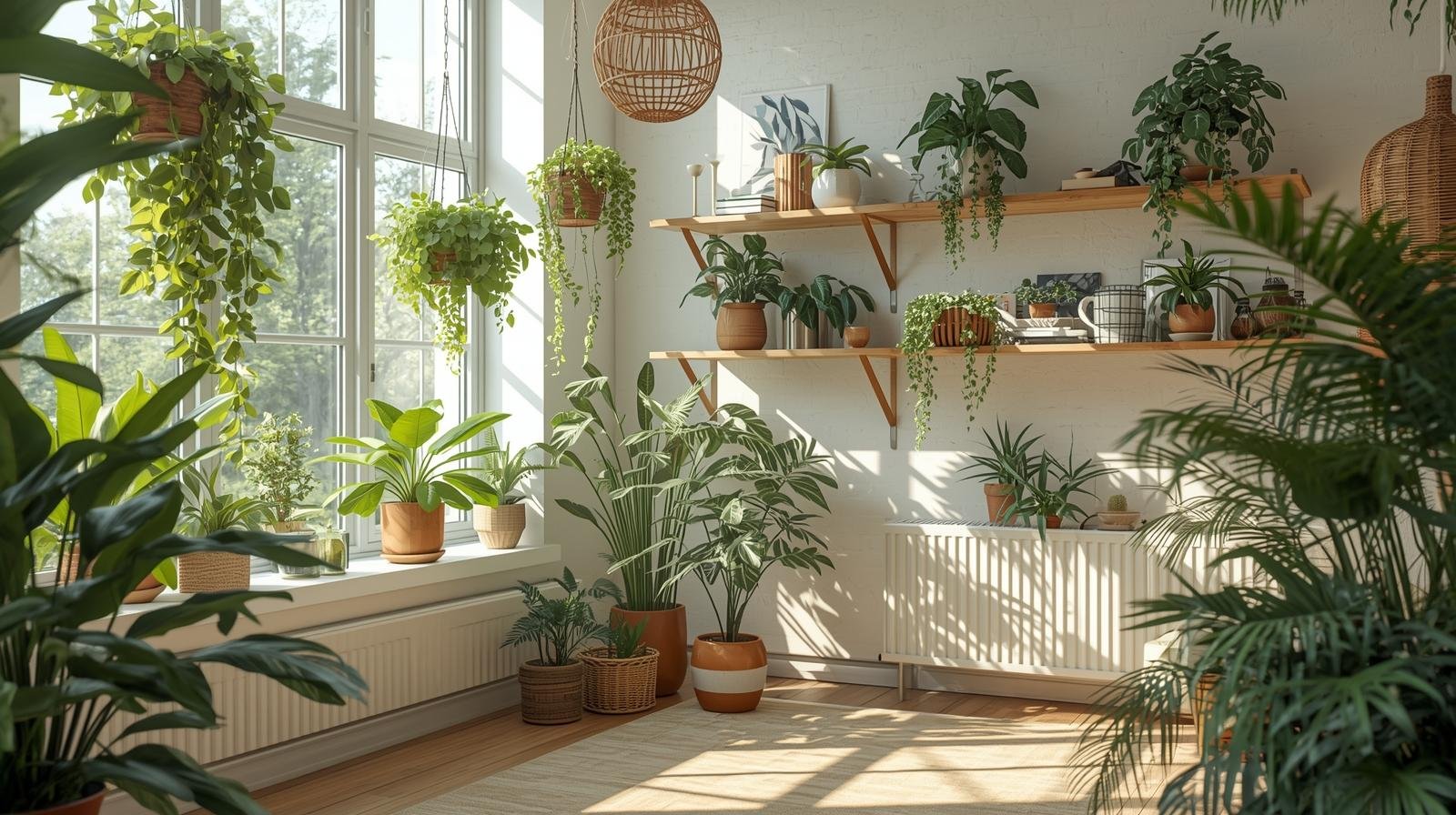
Creative Ways to Decorate with Indoor Plants
Introduction
Indoor plants can enhance living spaces while improving air quality and providing a functional home environment. Using plants creatively allows homeowners to maximize space, highlight design elements, and integrate greenery throughout the home. Strategic placement, container choices, and plant combinations make indoor gardening both practical and visually appealing.
This guide explains creative methods to decorate with indoor plants while maintaining their health and functionality.
Step 1: Choose Plants for Function and Design
Selecting plants based on their purpose and appearance is the first step:
- Air-purifying plants: Snake plants, peace lilies, and spider plants can be placed in common areas.
- Visual interest: Foliage plants like fiddle leaf figs or rubber plants provide structure and height.
- Compact plants: Succulents and small herbs can be used for tabletop displays or shelves.
Matching plants to function and space ensures practicality while enhancing design.
Step 2: Use Vertical Space
Vertical gardening maximizes space in small areas:
- Hanging planters: Use ceiling hooks or wall-mounted holders for trailing plants.
- Wall-mounted shelves: Arrange pots on multiple levels for visual interest.
- Plant ladders or stands: Stack plants in ascending heights to create a focal point.
Vertical arrangements add greenery without occupying floor space.
Step 3: Group Plants by Type or Color
Grouping plants creates a cohesive look:
- Place plants with similar leaf shapes or colors together for harmony.
- Combine contrasting foliage for visual depth.
- Cluster air-purifying plants in high-use areas to combine function with aesthetics.
Groupings simplify care routines and enhance design consistency.
Step 4: Use Decorative Containers
Containers influence both appearance and plant health:
- Material: Clay, ceramic, metal, or woven baskets can complement room decor.
- Size: Choose pots proportional to plant size and space.
- Style: Match container style to home design, from minimalistic to eclectic.
Decorative containers integrate plants into interior design seamlessly.
Step 5: Integrate Plants with Furniture
Plants can be placed in relation to furniture to improve flow:
- End tables and shelves: Place small plants on side tables, shelves, or consoles.
- Corners: Use tall plants like palms or fiddle leaf figs to fill empty corners.
- Desks and workspaces: Add small plants to improve air quality and provide visual relief.
Placing plants near furniture enhances both design and functionality.
Step 6: Create Plant Focal Points
Plants can serve as focal points in a room:
- Use a large plant in an entryway or living area to draw attention.
- Cluster medium-sized plants in groups to create an indoor garden effect.
- Highlight plants with lighting, such as spotlights or natural sunlight.
Focal points guide visual flow and add structure to interior spaces.
Step 7: Mix Plant Types and Heights
Variation in plant height and type creates dynamic arrangements:
- Place tall plants behind medium or short plants for layered depth.
- Combine leafy, trailing, and upright plants to maintain diversity.
- Ensure spacing allows each plant sufficient light and air circulation.
Mixed arrangements provide aesthetic appeal while supporting plant health.
Step 8: Use Plants as Room Dividers
Indoor plants can separate spaces without walls:
- Tall plants or plant screens can divide living and dining areas.
- Hanging planters can delineate areas while remaining open.
- Plant walls or vertical gardens provide partial separation and visual interest.
Plants function as natural dividers while maintaining airflow and openness.
Step 9: Seasonal or Rotating Displays
Changing plant arrangements seasonally keeps spaces fresh:
- Rotate plants based on seasonal growth or flowering.
- Introduce small seasonal plants to tables, windowsills, or shelves.
- Adjust lighting and placement according to seasonal sunlight.
Seasonal adjustments maintain visual appeal and support plant growth.
Step 10: Incorporate Plants into Functional Spaces
Integrate plants into areas where they add utility:
- Kitchens: Grow herbs in small pots for cooking use.
- Bathrooms: Place humidity-tolerant plants to improve air quality.
- Home offices: Add small indoor plants for visual relief and improved focus.
Functional placement enhances both usability and aesthetic value.
Step 11: Consider Indoor Microclimates
Different areas may have distinct conditions:
- Place humidity-loving plants in bathrooms or near humidifiers.
- Use drought-tolerant plants near windows with strong light.
- Adjust watering and care according to microclimate variations.
Matching plants to microclimates ensures longevity and reduces maintenance challenges.
Step 12: Maintain Cleanliness and Plant Health
Well-maintained plants enhance decorative effect:
- Clean leaves regularly to remove dust and allow photosynthesis.
- Remove dead leaves and flowers to maintain tidy appearance.
- Monitor for pests and diseases to prevent damage.
Healthy plants contribute to both aesthetics and indoor air quality.
Step 13: Combine Plants with Decorative Elements
Integrate plants with other design elements:
- Use stones, pebbles, or moss in pots for texture and visual contrast.
- Combine plants with decorative objects like sculptures or candles.
- Place plants near mirrors to reflect greenery and expand visual space.
Combining plants with decor enhances the indoor environment and creates harmony.
Conclusion
Creative indoor plant decoration involves selecting suitable plants, utilizing vertical and horizontal space, grouping and layering plants, and integrating them with furniture and design elements. Rotating displays, functional placement, and attention to microclimates support plant health and longevity.
By following these strategies, homeowners can maintain a functional, organized, and visually appealing indoor garden that enhances living spaces and provides clean air throughout the home.

Leave a Reply