
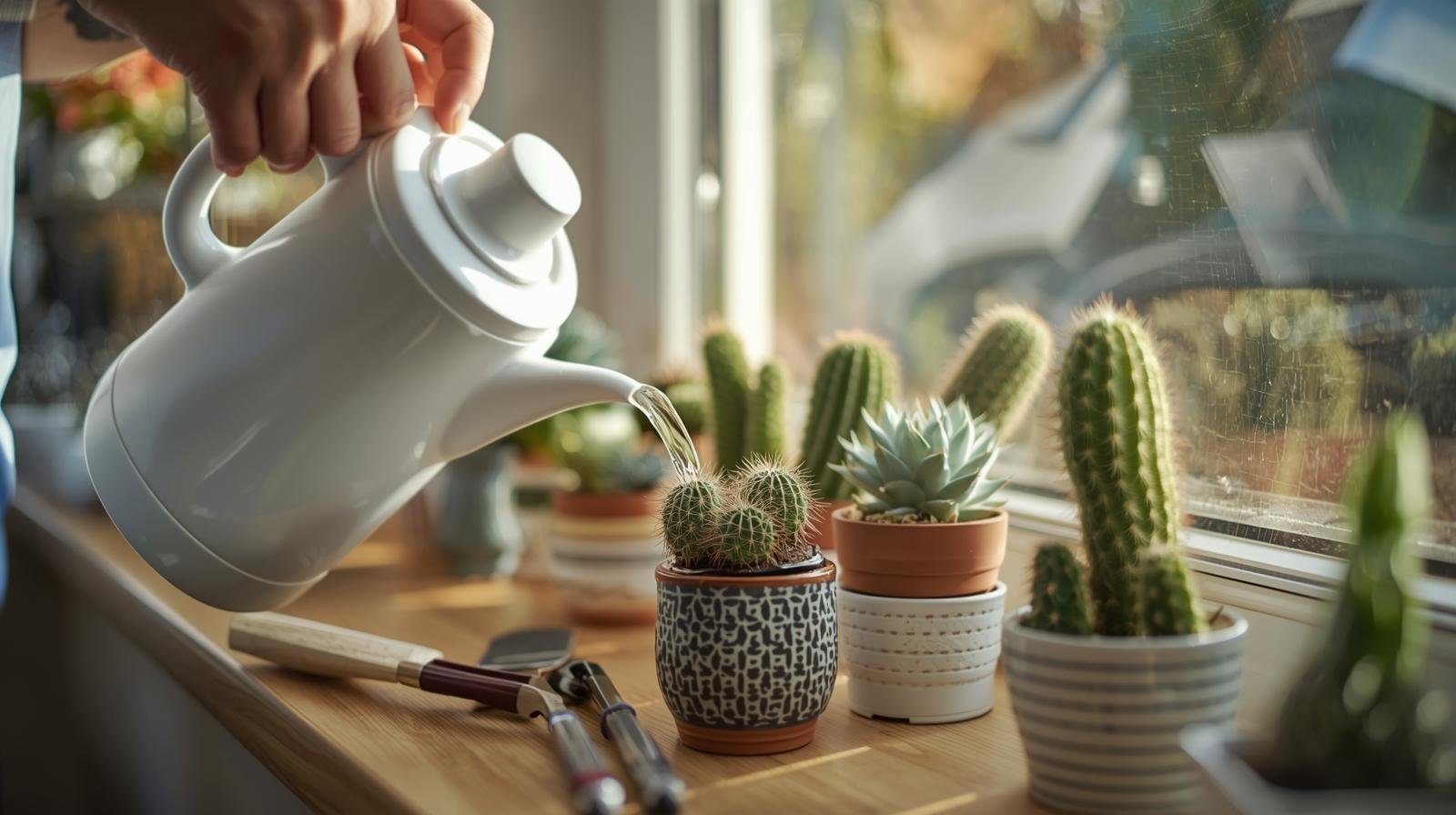
Caring for Succulents and Cacti at Home
Introduction
Succulents and cacti are popular indoor plants because they store water in their leaves and stems, making them suitable for homes with limited watering routines. Proper care ensures these plants survive and grow efficiently indoors. Understanding their water requirements, soil preferences, light needs, and maintenance routines is key to sustaining healthy succulents and cacti.
This guide explains step-by-step how to care for succulents and cacti, from selecting containers to ongoing maintenance.
Step 1: Choose the Right Plant
Select succulents and cacti based on space and indoor conditions:
- Space availability: Determine the area for placement. Some cacti grow tall while succulents remain small.
- Light requirements: Succulents typically need bright light; some cacti tolerate lower light indoors.
- Growth rate: Consider how quickly the plant will grow and whether it fits your indoor environment.
Choosing the right plant from the start reduces the need for frequent repositioning or repotting.
Step 2: Select Suitable Containers
Container choice is essential for root health:
- Drainage: Ensure containers have holes to prevent waterlogging.
- Size: Choose pots slightly larger than the root ball; avoid excessively large pots that retain too much water.
- Material: Terracotta and ceramic are preferred for their breathability; plastic retains moisture longer.
Proper containers prevent root rot and support healthy plant development.
Step 3: Use Appropriate Soil
Succulents and cacti require well-draining soil:
- Soil mix: Use a blend of sand, perlite, and organic matter designed for cacti and succulents.
- Drainage improvement: Add coarse sand or small gravel to enhance drainage.
- pH level: Slightly acidic to neutral soil (pH 6.0–7.0) supports healthy growth.
The right soil mix reduces water retention and promotes healthy root growth.
Step 4: Place Plants in Proper Light
Light is essential for photosynthesis and growth:
- Bright light: Position near windows with direct or filtered sunlight. South-facing windows are ideal.
- Rotation: Rotate plants occasionally to ensure even light distribution and prevent uneven growth.
- Artificial light: If natural light is limited, use grow lights to supplement exposure.
Adequate light supports strong, compact growth and prevents stretching.
Step 5: Watering Techniques
Succulents and cacti store water, so watering must be managed carefully:
- Frequency: Water only when soil is completely dry. Overwatering is the most common cause of plant death.
- Method: Water at the base of the plant; avoid getting water on leaves or stems.
- Seasonal adjustments: Reduce watering in winter when growth slows; increase slightly during active growth periods.
Correct watering maintains plant health and prevents root rot.
Step 6: Fertilization
Succulents and cacti require minimal fertilization:
- Type: Use a low-nitrogen fertilizer formulated for cacti and succulents.
- Timing: Fertilize during the growing season, typically spring and summer.
- Frequency: Apply once every 4–6 weeks; avoid fertilizing in dormant periods.
Fertilization supports growth and flowering without overstimulating the plant.
Step 7: Temperature and Humidity
Environmental conditions affect indoor survival:
- Temperature range: Most succulents and cacti prefer 18–27°C (65–80°F) during the day and slightly cooler at night.
- Humidity: Low humidity environments are ideal. Avoid placing plants in bathrooms or near humidifiers.
- Air circulation: Ensure good air movement around plants to prevent fungal growth.
Maintaining proper temperature and humidity ensures long-term plant health.
Step 8: Pruning and Leaf Maintenance
Succulents and cacti may need occasional pruning:
- Remove dead or damaged leaves or stems to prevent disease spread.
- Trim elongated growth that occurs due to insufficient light.
- Handle plants carefully to avoid damaging spines or delicate leaves.
Pruning helps maintain plant shape and promotes healthy growth.
Step 9: Repotting
Repotting is necessary when plants outgrow their containers:
- Timing: Repot during the growing season.
- Soil replacement: Refresh soil to maintain nutrient levels and improve drainage.
- Handling: Use gloves for cacti and handle succulents gently to prevent leaf loss.
Repotting ensures continued healthy root development.
Step 10: Pest Management
Succulents and cacti are generally resistant to pests but monitoring is necessary:
- Common pests: Mealybugs, spider mites, and scale insects may appear.
- Inspection: Check leaves, stems, and soil surface regularly.
- Control: Remove pests manually or use suitable insecticidal soap or natural remedies.
Early detection prevents infestations from spreading and affecting plant health.
Step 11: Grouping Plants by Care Needs
Place plants with similar care requirements together:
- Combine low-water succulents in one area for consistent watering routines.
- Group cacti that tolerate bright, direct sunlight together.
- Arrange plants with similar light needs to optimize growth.
Grouping simplifies care and reduces the risk of mistakes.
Step 12: Seasonal Adjustments
Adjust care according to seasons:
- Spring and summer: Increase watering and light exposure; fertilize during active growth.
- Autumn and winter: Reduce watering and avoid fertilization; maintain moderate light.
- Indoor adjustments: Move plants closer to windows during short daylight periods.
Seasonal adjustments align with the plant’s natural growth cycles.
Step 13: Monitoring and Observation
Regular observation ensures plants remain healthy:
- Watch for discoloration, drooping, or root issues.
- Adjust water, light, or soil conditions as needed.
- Maintain a record of care routines to track plant response.
Consistent monitoring supports long-term indoor plant success.
Conclusion
Caring for succulents and cacti at home involves selecting suitable plants, containers, and soil, managing light and water carefully, and monitoring plant health. Pruning, repotting, and pest management maintain plant growth and stability. Grouping plants and adjusting care seasonally simplifies maintenance.
Following these steps allows homeowners to maintain healthy succulents and cacti indoors, supporting a sustainable and organized indoor garden.

Leave a Reply