
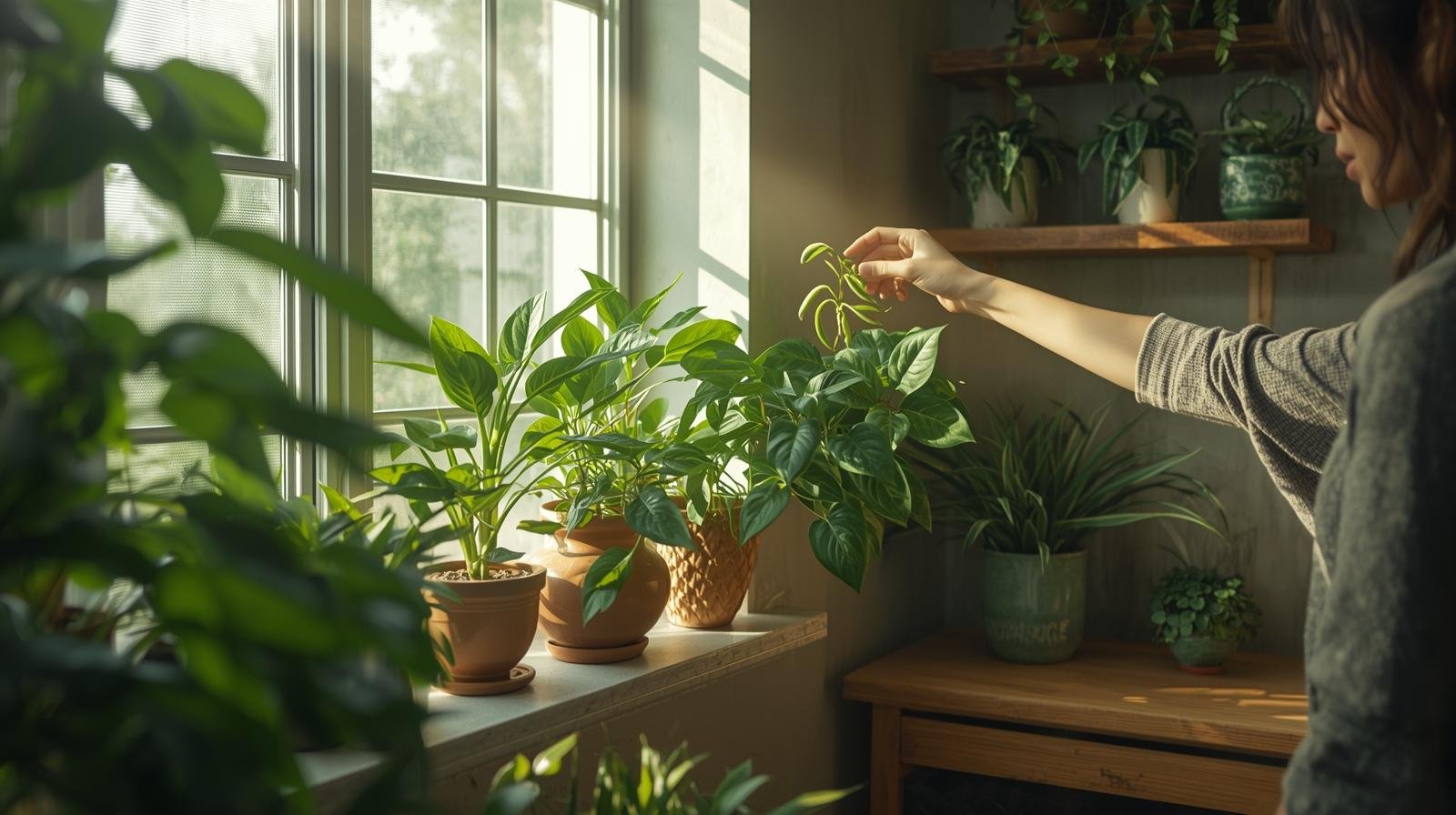
Choosing the Right Plants for Indoor Gardening
Introduction
Indoor gardening allows homeowners to bring greenery into living spaces, grow herbs and vegetables inside, and maintain plant life year-round. Choosing the right plants for indoor gardening requires understanding light availability, space constraints, and the care requirements of different plant types. Proper plant selection improves growth, reduces maintenance, and ensures that indoor spaces remain functional and organized.
This guide explains how to select indoor plants, considering environmental conditions, plant characteristics, and long-term care.
Step 1: Assess Available Space
The first step in selecting indoor plants is to evaluate available space:
- Location: Identify areas where plants can receive natural or artificial light, such as windows, shelves, or tables.
- Size limitations: Consider ceiling height, shelf depth, and floor space. Avoid plants that will outgrow available space.
- Placement: Decide whether plants will be on the floor, tables, hanging planters, or windowsills.
Proper space assessment prevents overcrowding and ensures that plants have room to grow.
Step 2: Evaluate Light Conditions
Light availability is a key factor for indoor plant selection:
- Bright light: Near south-facing windows or areas with direct sunlight. Suitable for herbs and flowering plants.
- Moderate light: East or west-facing windows or rooms with indirect sunlight. Suitable for foliage plants.
- Low light: Spaces with little natural light, relying on artificial lighting. Suitable for low-light tolerant plants such as ferns or snake plants.
Understanding light conditions ensures plants receive enough energy for photosynthesis and growth.
Step 3: Identify Plant Types
Indoor plants can be categorized by type and function:
- Foliage plants: Provide greenery and absorb carbon dioxide. Examples include pothos, snake plant, and philodendron.
- Herbs: Useful for cooking and household use, such as basil, parsley, or mint.
- Flowering plants: Produce flowers indoors. Examples include African violets and orchids.
- Air-purifying plants: Filter indoor air and reduce pollutants. Examples include peace lilies and spider plants.
Selecting plant types based on intended use helps create a functional indoor garden.
Step 4: Consider Growth Rate and Maintenance
Plant growth rate affects maintenance requirements:
- Fast-growing plants: Require regular pruning and larger pots. Examples include pothos and mint.
- Slow-growing plants: Require minimal maintenance and are suitable for limited care routines. Examples include snake plants and cacti.
Maintenance factors also include watering frequency, humidity requirements, and pruning needs.
Step 5: Determine Watering Needs
Different plants require different watering schedules:
- High-water plants: Require frequent watering, such as ferns.
- Moderate-water plants: Need watering every few days, like pothos or peace lilies.
- Low-water plants: Require minimal watering, such as succulents or cacti.
Selecting plants with compatible watering needs simplifies care routines for indoor gardening.
Step 6: Evaluate Pot and Soil Requirements
Plant container and soil type affect growth:
- Pot size: Choose pots that accommodate root systems without overcrowding.
- Drainage: Ensure pots have drainage holes to prevent water accumulation.
- Soil type: Use soil suitable for plant type. Succulents require sandy soil, while leafy plants require nutrient-rich potting soil.
Proper pot and soil selection supports root development and reduces the risk of plant stress.
Step 7: Assess Temperature and Humidity Conditions
Indoor environments vary in temperature and humidity:
- Tropical plants: Require consistent warmth and moderate humidity.
- Temperate plants: Adapt to indoor temperature fluctuations.
- Succulents and cacti: Tolerate dry conditions and temperature variations.
Matching plants to environmental conditions improves survival rates and growth.
Step 8: Grouping Plants by Care Requirements
Grouping plants with similar needs simplifies care:
- Place plants with similar light, water, and humidity requirements together.
- Grouping reduces the risk of overwatering or underexposing plants to sunlight.
- Grouped plants are easier to monitor and maintain.
Step 9: Consider Plant Longevity
Plant longevity affects planning:
- Annuals: Complete their life cycle in one year. Suitable for seasonal indoor decoration.
- Perennials: Live multiple years and provide ongoing greenery. Examples include snake plants and philodendrons.
Selecting long-lasting plants ensures a sustainable indoor garden.
Step 10: Plan for Accessibility and Aesthetics
Indoor plant placement should balance functionality and design:
- Keep frequently used herbs within reach of the kitchen.
- Place decorative foliage plants where they enhance visual space.
- Avoid blocking windows or pathways with large plants.
Thoughtful placement supports efficient use of space while maintaining greenery in living areas.
Step 11: Introduce Variety for Function
Indoor gardens benefit from a mix of plants:
- Combine air-purifying plants, flowering plants, and herbs for multiple purposes.
- Use different heights and textures to maximize visual appeal.
- Rotate plants periodically to adjust light exposure or for seasonal changes.
Step 12: Monitor Plant Health
Ongoing monitoring ensures plant survival:
- Inspect leaves, stems, and roots for signs of pests, disease, or nutrient deficiency.
- Adjust watering, light exposure, or soil nutrients based on observations.
- Remove dead leaves or damaged plants promptly to maintain a healthy indoor garden.
Step 13: Plan for Expansion
Indoor gardening allows gradual expansion:
- Start with a few plants and expand as experience grows.
- Introduce new species according to space and environmental suitability.
- Plan growth patterns to avoid overcrowding or competition among plants.
Conclusion
Selecting the right plants for indoor gardening requires evaluating space, light, maintenance needs, watering schedules, soil types, temperature, and plant longevity. Grouping plants with similar requirements simplifies care, while planning for accessibility and variety ensures a functional indoor garden.
By following these steps, homeowners can create an indoor garden that provides greenery, fresh herbs, and improved air quality, while maintaining sustainable growth and efficient care routines.

Leave a Reply