
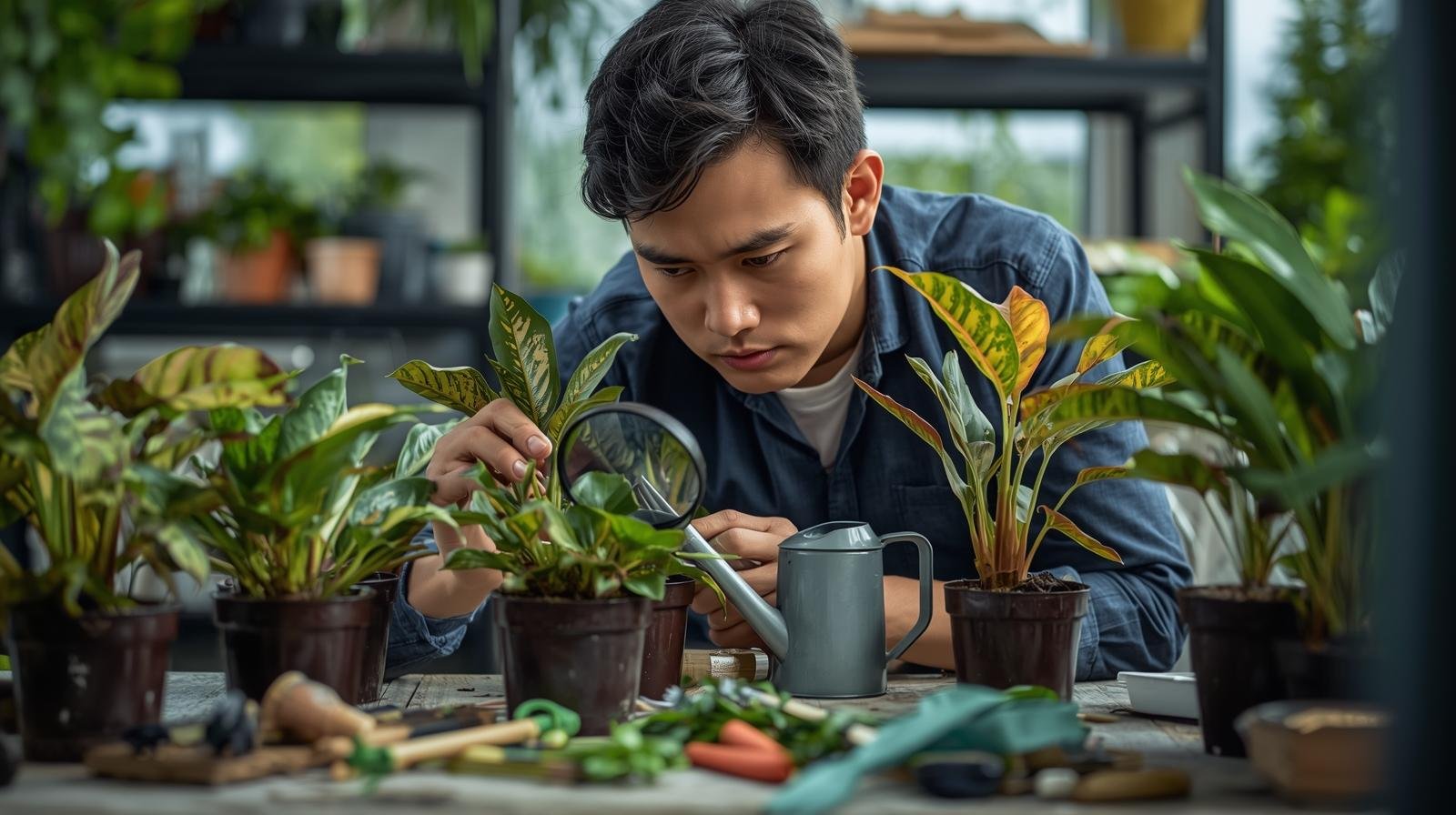
Common Indoor Plant Problems and Solutions
Introduction
Indoor plants are prone to various problems that can affect their growth and survival. Identifying issues early and applying appropriate solutions ensures that plants remain healthy and functional in indoor spaces. Common problems include overwatering, pests, diseases, nutrient deficiencies, and environmental stress.
This guide provides a step-by-step approach to recognizing and solving common indoor plant problems, allowing homeowners to maintain a thriving indoor garden.
Step 1: Overwatering and Root Rot
Excess water is the leading cause of indoor plant failure:
- Symptoms: Yellowing leaves, wilting despite moist soil, and soft or mushy roots.
- Solution: Reduce watering frequency; allow soil to dry between watering.
- Prevention: Use pots with proper drainage and well-draining soil.
Monitoring soil moisture before watering prevents root rot and supports healthy growth.
Step 2: Underwatering
Lack of water can also stress plants:
- Symptoms: Dry, brittle leaves, slow growth, and leaf drop.
- Solution: Water thoroughly until water drains from the pot base.
- Prevention: Establish a consistent watering schedule based on plant type and indoor conditions.
Correct watering balances soil moisture and prevents stress.
Step 3: Insufficient Light
Indoor plants require adequate light for photosynthesis:
- Symptoms: Leggy growth, pale leaves, and reduced flowering.
- Solution: Move plants closer to windows or provide supplemental grow lights.
- Prevention: Assess natural light in the room and select plants accordingly.
Proper light exposure ensures strong growth and proper development.
Step 4: Excess Light or Heat Stress
Too much direct sunlight or heat can damage plants:
- Symptoms: Leaf scorch, brown tips, or curling leaves.
- Solution: Relocate plants to areas with filtered or indirect sunlight.
- Prevention: Use curtains, blinds, or rotate plants to moderate exposure.
Balancing light prevents stress while supporting plant growth.
Step 5: Nutrient Deficiencies
Plants may show deficiencies if soil lacks essential nutrients:
- Nitrogen deficiency: Yellowing leaves, slow growth.
- Phosphorus deficiency: Dark green leaves with purple tints; poor root development.
- Potassium deficiency: Brown edges on leaves; weak stems.
- Solution: Apply appropriate organic fertilizers or amend soil.
- Prevention: Use nutrient-rich soil and maintain a feeding schedule suitable for plant type.
Correcting deficiencies restores growth and improves plant resilience.
Step 6: Pests
Indoor plants are susceptible to pests such as:
- Aphids, spider mites, and mealybugs that feed on sap.
- Symptoms: Yellowing leaves, sticky residue, webbing, or visible insects.
- Solution: Remove pests manually or use safe insecticidal soap or neem oil.
- Prevention: Inspect plants regularly, quarantine new plants, and maintain clean surroundings.
Early intervention prevents infestations from spreading.
Step 7: Fungal and Bacterial Diseases
Fungi and bacteria can affect leaves, stems, and roots:
- Symptoms: Leaf spots, mold growth, wilting, and stunted growth.
- Solution: Remove infected plant parts and apply suitable fungicides or natural remedies.
- Prevention: Ensure proper spacing for air circulation, avoid overhead watering, and maintain clean tools.
Good hygiene and environmental control reduce the risk of disease.
Step 8: Leaf Drop and Browning Tips
Leaf issues often indicate environmental or care problems:
- Causes: Low humidity, inconsistent watering, temperature fluctuations, or overfertilization.
- Solution: Adjust watering routines, maintain moderate humidity, and remove damaged leaves.
- Prevention: Match plant care to its natural requirements and monitor indoor conditions.
Addressing environmental stress helps maintain overall plant health.
Step 9: Pest and Disease Prevention
Preventive measures reduce indoor plant problems:
- Inspect new plants before bringing them indoors.
- Maintain clean pots, tools, and plant surfaces.
- Rotate plants periodically to ensure uniform light exposure.
- Avoid overcrowding to improve airflow.
Preventive care reduces stress and limits the risk of recurring problems.
Step 10: Repotting and Soil Management
Repotting can resolve several issues:
- Symptoms addressed: Root-bound plants, poor soil drainage, and nutrient depletion.
- Process: Select a pot slightly larger than the root ball, replace old soil, and gently loosen roots.
- Timing: Repot during the growing season for best results.
Proper soil management ensures plants have sufficient nutrients and room to grow.
Step 11: Environmental Adjustments
Adjust the indoor environment to prevent recurring problems:
- Maintain consistent temperature and avoid cold drafts or heat sources.
- Increase humidity for plants requiring moisture, using trays or humidifiers.
- Optimize light exposure according to plant type.
Environmental control supports long-term indoor plant health.
Step 12: Regular Monitoring and Observation
Consistent observation identifies problems early:
- Examine leaves, stems, and roots regularly.
- Note changes in growth, color, or structure.
- Adjust care routines promptly based on observations.
Monitoring allows timely intervention, reducing stress and damage.
Step 13: Record Keeping
Maintaining records supports better plant management:
- Track watering schedules, fertilization, and pruning.
- Document pest or disease occurrences and the solutions applied.
- Record plant growth patterns to plan future care.
Records help homeowners maintain an organized and effective indoor garden.
Conclusion
Common indoor plant problems include overwatering, underwatering, insufficient or excess light, nutrient deficiencies, pests, diseases, and environmental stress. Identifying symptoms early and applying targeted solutions ensures healthy growth. Preventive measures, proper soil and container selection, environmental adjustments, and regular monitoring maintain plant health and productivity.
Following these steps allows homeowners to sustain indoor plants, improve the indoor environment, and create an organized and functional indoor garden.

Leave a Reply