
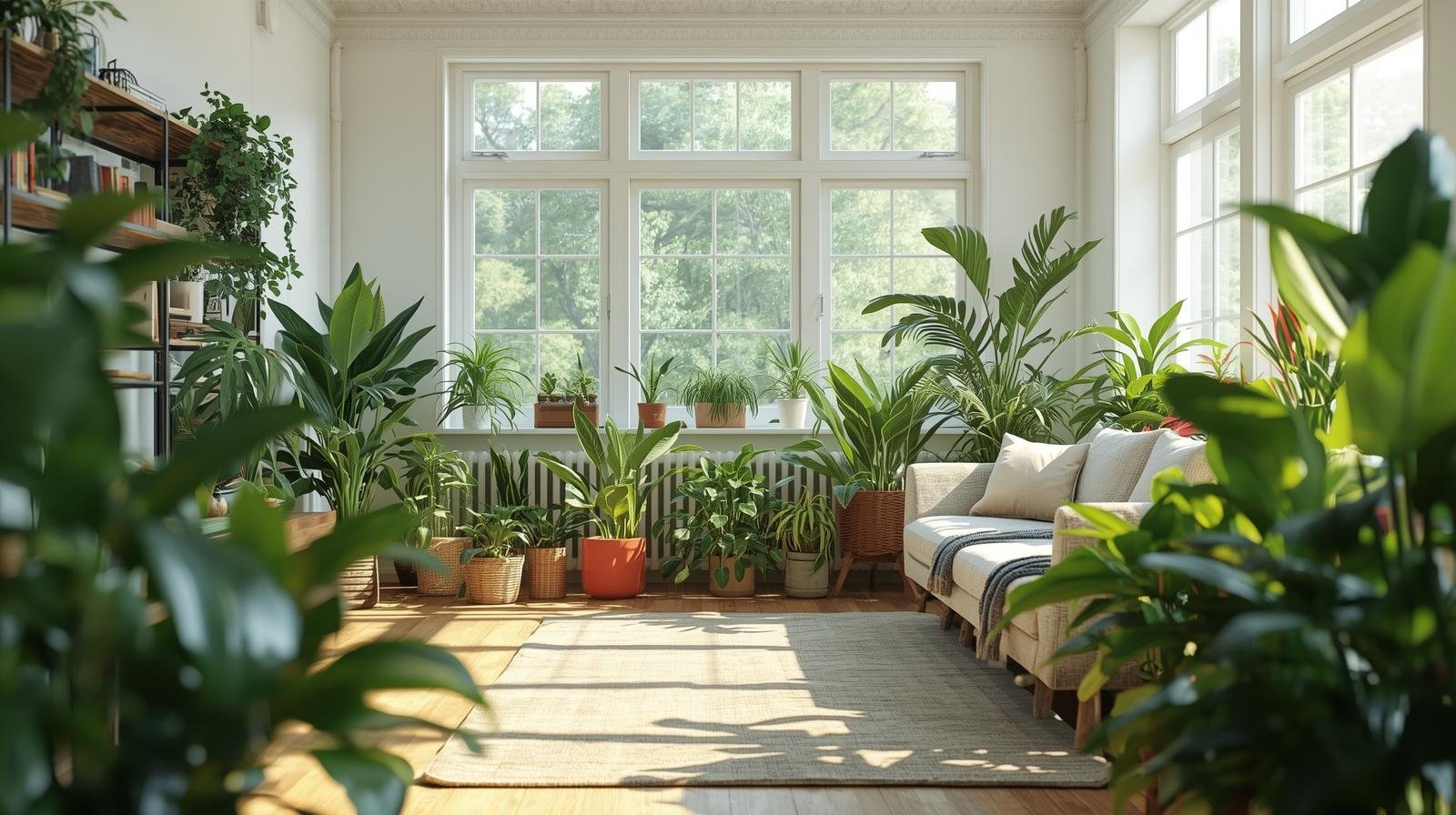
Top Indoor Plants for Clean Air
Introduction
Indoor plants are commonly used to improve the quality of air inside homes. They can absorb carbon dioxide, remove pollutants, and provide a healthier environment. Certain plants are particularly effective at filtering indoor air, which helps maintain a clean and functional living space.
This guide identifies the top indoor plants for clean air, explains their benefits, and provides guidance on selecting, placing, and caring for them in a home environment.
Step 1: Identify Indoor Air Pollutants
Indoor air can contain substances that affect health and plant growth:
- Volatile organic compounds (VOCs): Found in paints, cleaning agents, and furniture materials.
- Formaldehyde: Emitted from pressed wood, insulation, and synthetic fabrics.
- Benzene and trichloroethylene: Present in certain adhesives and plastics.
- Carbon dioxide: Accumulates indoors due to human respiration.
Understanding the types of pollutants helps select plants that are effective at filtering specific compounds.
Step 2: Select Plants Based on Air Purification Needs
Different plants filter different compounds. Key plants include:
- Snake plant (Sansevieria): Filters formaldehyde and nitrogen compounds; tolerates low light.
- Spider plant (Chlorophytum comosum): Removes carbon monoxide and formaldehyde; grows rapidly in indirect light.
- Peace lily (Spathiphyllum): Absorbs VOCs and provides consistent filtering; requires moderate care.
- Boston fern (Nephrolepis exaltata): Effective at removing indoor pollutants; prefers humid conditions.
- Areca palm (Dypsis lutescens): Removes toxins and adds moisture to indoor air; suitable for larger spaces.
Plants can be chosen individually or in combination to maximize air purification.
Step 3: Assess Light Conditions
Air-purifying plants have specific light requirements:
- Low-light tolerant plants: Snake plant and peace lily are suitable for rooms with limited sunlight.
- Moderate light: Spider plants thrive near windows with indirect sunlight.
- Bright indirect light: Boston ferns prefer filtered light from windows.
Matching plants to available light ensures healthy growth and continued air filtration.
Step 4: Select Proper Containers
Container choice affects plant health and air-cleaning effectiveness:
- Pot size: Should accommodate root growth without restricting development.
- Drainage: Ensure pots have holes to prevent waterlogging.
- Material: Clay, ceramic, and plastic are commonly used; select based on space and aesthetics.
Proper containers support plant stability and efficient nutrient absorption.
Step 5: Use Suitable Soil Mixes
Soil supports plant roots and provides nutrients. For indoor plants:
- Well-draining soil: Prevents water accumulation and root rot.
- Nutrient-rich soil: Provides essential elements for growth.
- Soil additives: Include perlite, vermiculite, or sand for improved aeration.
Healthy soil improves plant resilience and air-cleaning capacity.
Step 6: Establish Watering Routine
Watering frequency depends on plant type and environment:
- Snake plant: Water sparingly, allowing soil to dry between watering.
- Spider plant: Keep soil moderately moist, avoid standing water.
- Peace lily: Water when soil feels dry on the surface; avoid overwatering.
- Boston fern: Maintain soil consistently moist without waterlogging.
Regular but appropriate watering maintains plant health and ensures continued air purification.
Step 7: Monitor Humidity and Temperature
Indoor air quality and plant performance are influenced by environmental conditions:
- Humidity: Boston ferns and peace lilies perform better in higher humidity. Use pebble trays or humidifiers if needed.
- Temperature: Maintain stable indoor temperature; avoid placing plants near vents or heaters.
Monitoring environmental conditions ensures plants can perform their air-cleaning functions effectively.
Step 8: Pruning and Leaf Maintenance
Leaves play a major role in air purification:
- Remove dust accumulation from leaves to allow proper gas exchange.
- Trim yellowing or damaged leaves to prevent nutrient diversion and maintain plant function.
- Inspect regularly for pests that can reduce the plant’s ability to filter air.
Proper leaf maintenance maximizes the plant’s air-cleaning efficiency.
Step 9: Placement for Maximum Effect
Strategic plant placement improves indoor air filtration:
- Group plants: Combine multiple species in living spaces for better coverage.
- Distribution: Place plants in areas with higher human activity or near pollutant sources.
- Height considerations: Taller plants like palms can improve air circulation in larger rooms, while smaller plants can be placed on desks or shelves.
Placement affects both aesthetic appeal and functional air purification.
Step 10: Combine Plants for Enhanced Results
Using multiple plant species together can increase effectiveness:
- Mix low-light and moderate-light plants to cover different areas.
- Combine fast-growing plants with slow-growing plants for continuous air filtration.
- Rotate plants seasonally to maintain growth and effectiveness.
Combination planting supports consistent indoor air quality.
Step 11: Monitor Plant Health
Healthy plants maintain their ability to filter air:
- Observe leaf color, stem strength, and overall growth.
- Detect early signs of pests or diseases and intervene promptly.
- Adjust watering, light, or soil conditions as needed.
Regular monitoring ensures plants continue to provide clean air.
Step 12: Consider Indoor Plant Quantity
The number of plants influences air purification:
- Research suggests 1 plant per 100 square feet provides noticeable air filtration.
- Increase plant numbers in rooms with poor ventilation or higher pollutant levels.
- Balance quantity with space and maintenance capacity to avoid overcrowding.
Proper quantity ensures a measurable improvement in indoor air quality.
Step 13: Ongoing Care and Maintenance
Maintaining indoor plants involves continuous attention:
- Water and feed according to plant needs.
- Clean leaves and monitor for pests regularly.
- Repot plants when roots outgrow containers to sustain growth.
Ongoing care sustains plant performance and the quality of indoor air.
Conclusion
Top indoor plants for clean air include snake plants, spider plants, peace lilies, Boston ferns, and areca palms. Selecting plants based on light, space, and maintenance requirements ensures successful indoor growth. Proper containers, soil, watering routines, and strategic placement enhance plant performance.
Regular monitoring, pruning, and care maintain plant health, while combining multiple species improves indoor air quality throughout the home. Implementing these steps allows homeowners to create a functional and organized indoor garden that supports clean air and overall well-being.

Leave a Reply